
5 Ways to Preserve Your Connecticut Gravel Driveway (And Cut Your Repair Costs)
Topics Covered: Maintenance • Drainage • Snow Removal • Regrading • Repairs
A well-installed gravel driveway in Connecticut can last decades — but only if it's cared for correctly. Connecticut throws a lot at a driveway in a single year: spring mud season, summer downpours, fall leaf litter, and months of snow plows scraping across the surface all winter. Without the right maintenance routine, that wear and tear adds up fast in the form of potholes, ruts, washouts, and low spots that hold water and cause inconvenient ruts and costly repairs and ongoing maintenance.
The good news is that most of the damage we get called out to repair is preventable or easily remediated. As one of Newtown's top gravel driveway maintenance companies, we see the same handful of issues on almost every service call — and they almost always trace back to a few maintenance habits that got skipped.
Here are the five things we recommend every Connecticut homeowner do to protect their investment and avoid unnecessary repairs.
1. Regrade and Re-Compact Every Spring
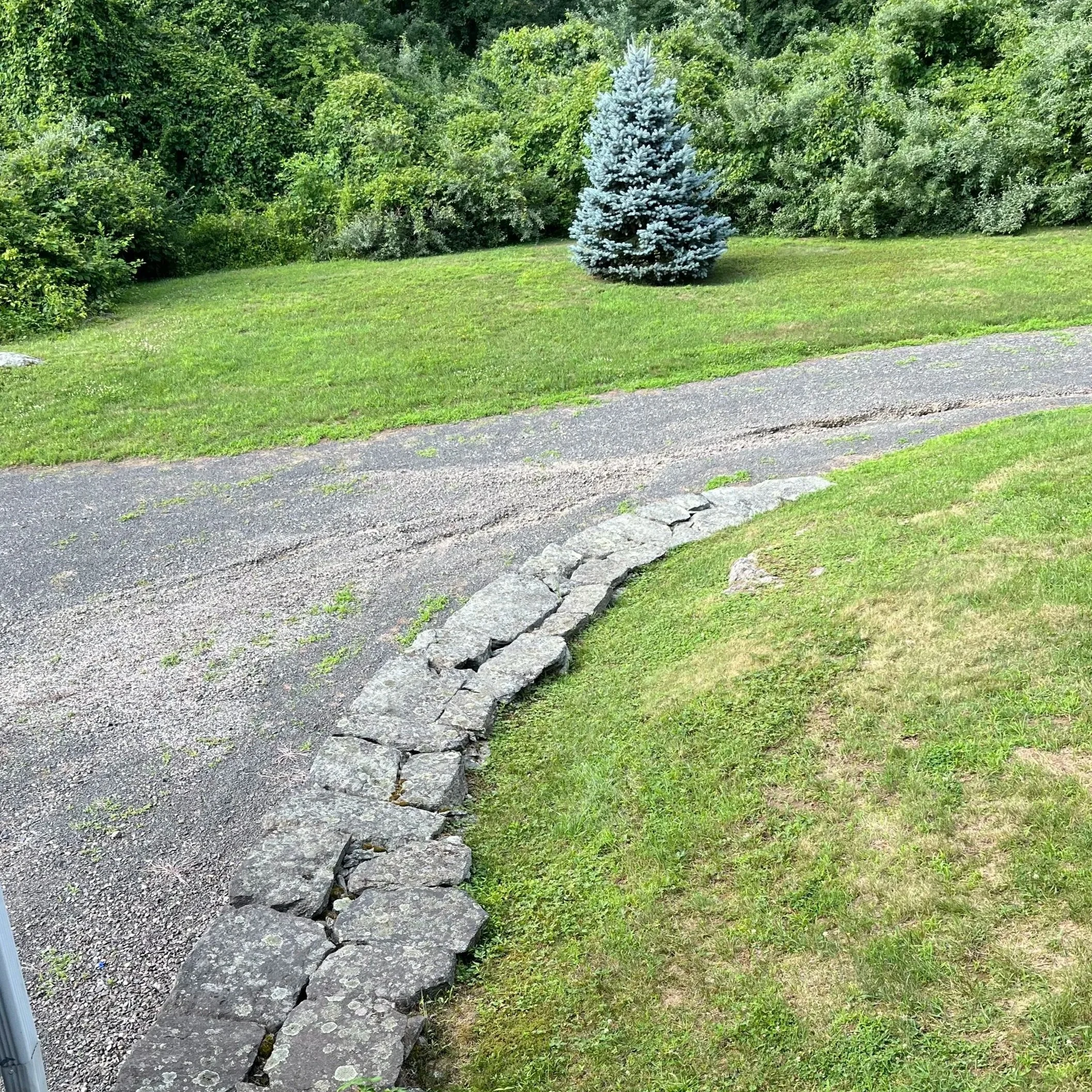
Gravel Driveway Damage Newtown, CT
Freeze-thaw cycles are the single biggest enemy of a Connecticut gravel driveway. As water in the base layer freezes and expands over the winter, it pushes stone out of place, creates soft spots, and leaves behind ruts and washboarding once the ground thaws. By the time spring mud season hits, your once-smooth surface can look like it took years of abuse in just a few months.
An annual spring regrade redistributes displaced stone, fills in low spots before they become potholes, and re-compacts the surface so it can shed water properly again. This single service is the most cost-effective thing you can do all year — a modest regrading bill now is dramatically cheaper than a full driveway reconstruction later.
2. Get Drainage Right — and Keep It That Way
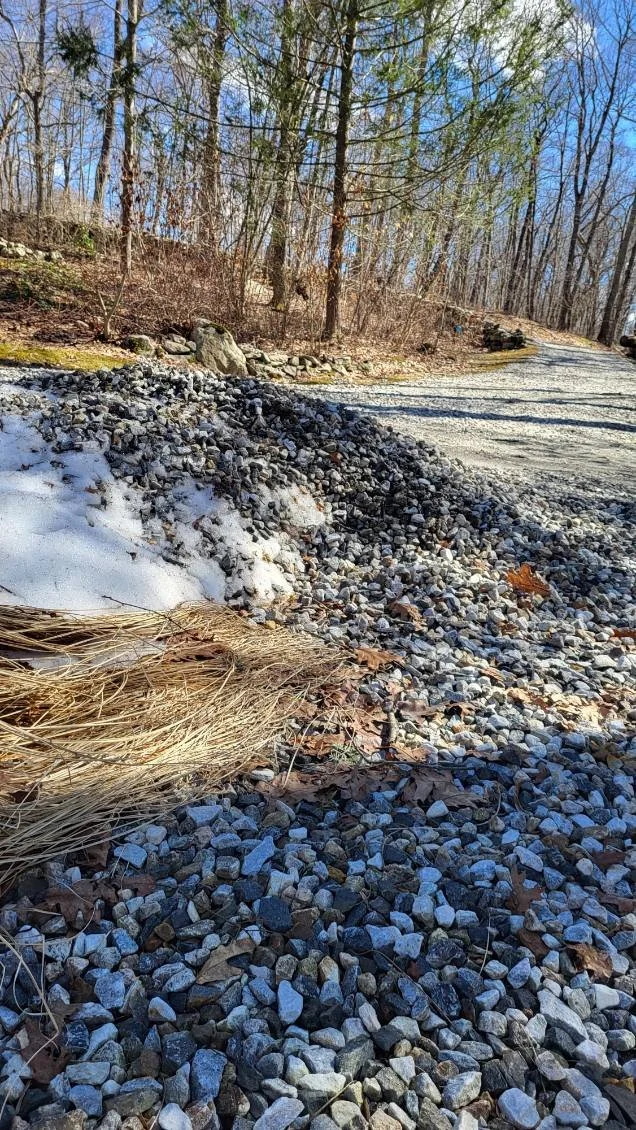
Gravel Driveway With Snow Plow Issues
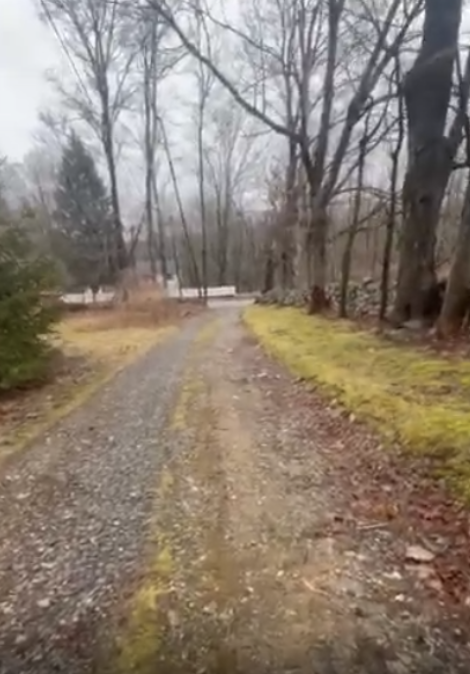
Severe Driveway Erosion Problems
Water is the root cause of almost every serious gravel driveway failure we see: washouts, base erosion, potholes, and soft, sinking sections. If water isn't shedding off the surface and away from the driveway edges, it's finding its way into the base layer, and that's where the real damage happens.
A few habits go a long way here:
Keep swales, drainage ditches, and culverts clear of leaves, sediment, and debris, especially heading into fall and spring rain.
Watch for new low spots after heavy storms — these are early warning signs that grading is needed before the next big rain does more damage.
If you're noticing recurring washouts in the same spot every year, that's usually a sign of an underlying grading or drainage issue, not just bad luck. It's worth having it evaluated rather than patching the same area repeatedly.
3. Use the Right Snow Removal Technique
Snow plows are one of the most common causes of premature gravel driveway damage in Connecticut, and it's almost always avoidable. A plow blade set too low will scrape up your top layer of stone along with the snow, stripping the surface bare and pushing gravel into your lawn, garden beds, or the street. During big storms, and with hills and turns, this is often difficult to consistently manage, however, a little guidance to your snow plow company could go a long way to reduce maintenance in the spring.
To protect your driveway through plow season:
Set the plow blade slightly above the gravel surface, not flush with it.
Mark the edges of your driveway with stakes in the fall so the plow operator (even if that's you) can see the boundaries under snow cover.
Avoid plowing all the way down to bare gravel; leaving a light dusting of packed snow protects the surface underneath.
In the spring, immediately replace and compact displaced gravel to allow it to compact in the spring rain and sun
If you're hiring a plow contractor, it's worth a quick conversation about blade height before the first snowfall rather than after the damage is done.
4. Stay Ahead of Vegetation and Weeds
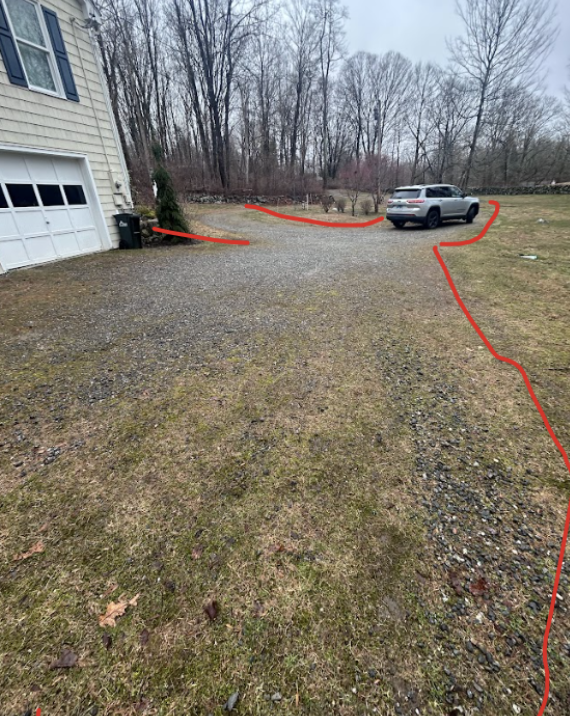
Gravel Driveway With Weeds Growing in Newtown, CT
Weeds growing up through a gravel driveway aren't just a cosmetic issue — their root systems break up compaction, create gaps where water can collect, and accelerate erosion over time. This is especially common in ¾" clean gravel driveways, which don't compact as tightly as process stone and give weeds more room to take hold.
Regular weed control, combined with periodic re-compaction, keeps the surface tight and reduces the openings where seeds can germinate in the first place. Catching vegetation early — before root systems get established — is far easier than dealing with a driveway that's overrun.
5. Replenish Your Top Layer Before It's Too Late
Gravel driveways naturally lose material over time. Stone migrates to the edges from vehicle traffic, gets displaced by plowing, or gradually works its way down into the base layer. Once the top layer gets too thin, the base stone underneath becomes exposed, compaction breaks down, and potholes start forming much faster.
Most Connecticut gravel driveways benefit from a fresh top-dress of material every few years, depending on traffic volume and material type. Waiting until the base is visibly exposed almost always means a bigger, more expensive repair than if a top-up had been done proactively.
Preventative Maintenance vs. Reactive Repairs
The theme across all five of these is the same: small, consistent maintenance is dramatically cheaper than reactive repairs. A driveway that gets an annual spring regrade, proper drainage upkeep, and careful snow removal can go years longer between major repairs — or a full driveway reconstruction — than one that's left to fend for itself.
If you want a deeper dive into driveway materials, base construction, and what drives long-term performance, we put together a full breakdown in our Connecticut Homeowner's Guide to Gravel Driveways, including a downloadable PDF you can save for reference.
Frequently Asked Questions
How often should a gravel driveway be regraded in Connecticut? Most Connecticut gravel driveways benefit from a full regrade once a year, typically in spring after frost heave and mud season have run their course. High-traffic driveways or those with drainage challenges may need it more often.
Why does my gravel driveway keep getting potholes in the same spot? Recurring potholes in the same location almost always point to a drainage or base issue rather than normal wear. That area is likely collecting water that's undermining the base layer, and repeated patching won't fix the underlying cause. We typically recommend installing ¾” process in potholes if a full regrade is not possible year after year.
Does the type of gravel affect how much maintenance it needs? Yes. ¾" process stone compacts tightly and holds up well with minimal upkeep, while clean gravel (no stone dust/fines) drains better but requires more frequent re-grading since the stones don't lock together as tightly.
Can I prevent plow damage to my gravel driveway? In most cases, yes. Setting the plow blade above the gravel surface and marking driveway boundaries before the first snowfall prevent the vast majority of plow-related stone loss and surface damage.
Ready for a gravel driveway that holds up to Connecticut winters? Whether you need a one-time regrade, a seasonal maintenance plan, or a full driveway renovation, our team can help. Get a free assessment or learn more about our gravel driveway installation, repair, and maintenance services.
Serving Newtown, Bethel, Redding, Ridgefield, Brookfield, Monroe, and Danbury, CT.